 MTG
MTG Land Calculator: How Many Lands & Mana Base for Your Deck
Use this MTG land calculator to find the ideal number of lands, weigh colored mana symbols in your deck, and balance basic lands, dual lands, and non-basic lands across 40-, 60-, and 100-card decks.
- Pips = colored symbols of one color in the cost: {1}{U}{U} is 2.
- Sources = lands (and mana rocks) in the deck that can make that color.
- Example: CC on turn 2 is a card like {U}{U} you want on curve.
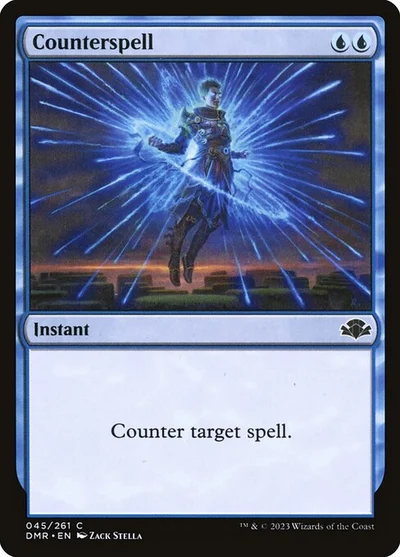
Recommended sources for CC on turn 2
20colored sources
Your 14 sources: 66.5% to cast on curveRun 20+ sources of this color for a 90% chance to cast CC on turn 2; your 14 sources hit 66.5%.
Target is 90% to cast on curve, given you hit your land drops (Karsten method).
Chance to hit every land drop
- Keepable 7 (2 to 5 lands)
- 84.4%
- Keepable by 6
- 97.6%
- Land ratio
- 40.0%
Compare land counts (0/3)
Pin 23, then 24, then 25 lands to see the turn-4 difference side by side.
MTG Land Calculator FAQ: How Many Lands Does Your Deck Need?
How many lands should be in a 60-card Standard MTG deck?
Low-curve aggro decks typically play 20 to 22 total lands, balanced midrange decks run 24 to 25 lands, and control decks aiming to hit their fourth and fifth land drops on time run 26 to 27 lands.
How many lands belong in a 100-card Commander deck?
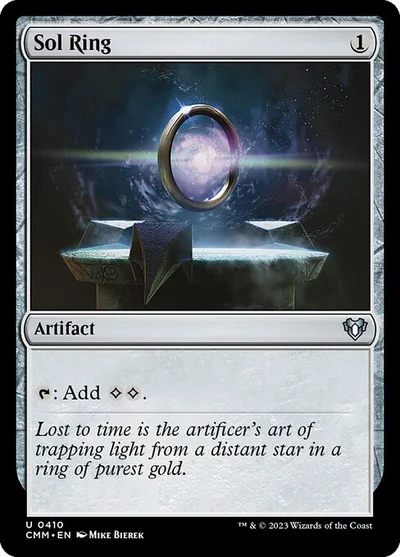
Most Commander decks perform best at 36 to 38 lands plus 8 to 12 low-cost ramp pieces (Sol Ring, Arcane Signet, 2-mana rocks or land ramp). Cutting below 34 lands sharply raises Turn 3–4 miss rates even with one free multiplayer mulligan.
How many colored sources do I need for a Turn 2 double-colored (CC) spell in 60 cards?
To cast a double-pip spell reliably on Turn 2 (~90% consistency when you have two lands), hypergeometric math recommends 20 sources of that color in a 60-card deck.
How do dual lands, non-basic lands, and mana rocks affect my land count?
Dual lands and multicolored non-basic lands count as a colored source for each color they produce, shrinking the number of basic lands needed to cast multicolored cards without raising your total lands. In Commander, every 2 to 3 cheap mana rocks (mana value 2 or less) lets you trim roughly 1 land depending on your mana curve and card draw.
How This MTG Land Calculator Works: Land Count, Mana Curve & Calculator for Non-Basic Lands
Find the ideal number of lands so you are able to cast your spells on curve: consider your deck’s strategy, mana curve, average mana value, colored mana symbols, and mana rocks—typically 17 total lands in 40-card Draft, 24 in 60-card Midrange, and 36–38 in Commander.
- 01
Computes exact log-space hypergeometric probabilities P(X ≥ k) for 40-, 60-, and 100-card decks on both Play (7 + T − 1 cards seen) and Draw (7 + T cards seen), showing the exact odds of drawing the lands you want by Turn 1 through Turn 6.
- 02
Weighs colored mana symbols in your deck and mana value pip density (C on Turn 1, CC on Turn 2, CCC on Turn 3) so you are consistently able to cast your spells—whether running basic lands, dual lands, fetch lands, or other non-basic lands.
- 03
Lets you consider your deck’s strategy and mana curve by pinning 16 vs. 17 vs. 18 or 23 vs. 24 vs. 25 total lands side-by-side, factoring in low-cost mana rocks and cantrips when tuning your number of lands.
Full formulas, test cases and the update policy live on the methodology page. Spotted a number that disagrees with the game? Send a formula report.